

An eating disorder is a serious mental health illness.
If you are in immediate distress or crisis, please contact emergency services by dialing 911 or calling Vancouver Island Crisis Line: 1-888-494-3888. A dietitian, psychologist, psychiatrist, and medical team work together to support eating disorder recovery.
This article is educational information only, not professional diagnosis or treatment. Content is AI generated and may not be reviewed for accuracy.
What if managing your blood sugar didn’t mean saying a permanent goodbye to the cultural dishes and favourite comfort foods you love? It’s completely understandable to feel overwhelmed by the conflicting advice surrounding “good” versus “bad” carbohydrates. You might feel a sense of anxiety every time you check your glucose levels, wondering if your last meal will cause a spike that leaves you feeling exhausted. Finding a dependable low glycemic index foods list shouldn’t feel like a chore or a punishment.
We believe that food should be a source of nourishment and connection, not a source of fear. This guide is designed to replace that worry with clarity by providing a comprehensive list of low-GI options and teaching you how this tool can support your energy without restrictive dieting. We will look at how to organize your meals using the glycemic index as a supportive compass, helping you feel empowered and satisfied.
This article provides general educational information and is not a substitute for professional medical advice, diagnosis, or treatment. Please consult with your own healthcare team, such as a doctor or Registered Dietitian, regarding your specific health needs and before making any changes to your nutrition plan.
Key Takeaways
- Understand how the 0–100 scale helps you identify how various carbohydrates may affect your blood sugar levels and overall energy.
- Explore a reliable low glycemic index foods list of whole, minimally processed options that are readily available across Canada.
- Learn why the glycemic impact of a food isn’t fixed and how your cooking methods can help you enjoy your favourite dishes with more peace of mind.
- Discover practical ways to organize your plate to support stability without the need for rigid or restrictive dieting rules.
- Identify when to seek personalized guidance from a Registered Dietitian to tailor these tools to your specific health needs and lifestyle.
What is the Glycemic Index and How Does it Support Your Health?
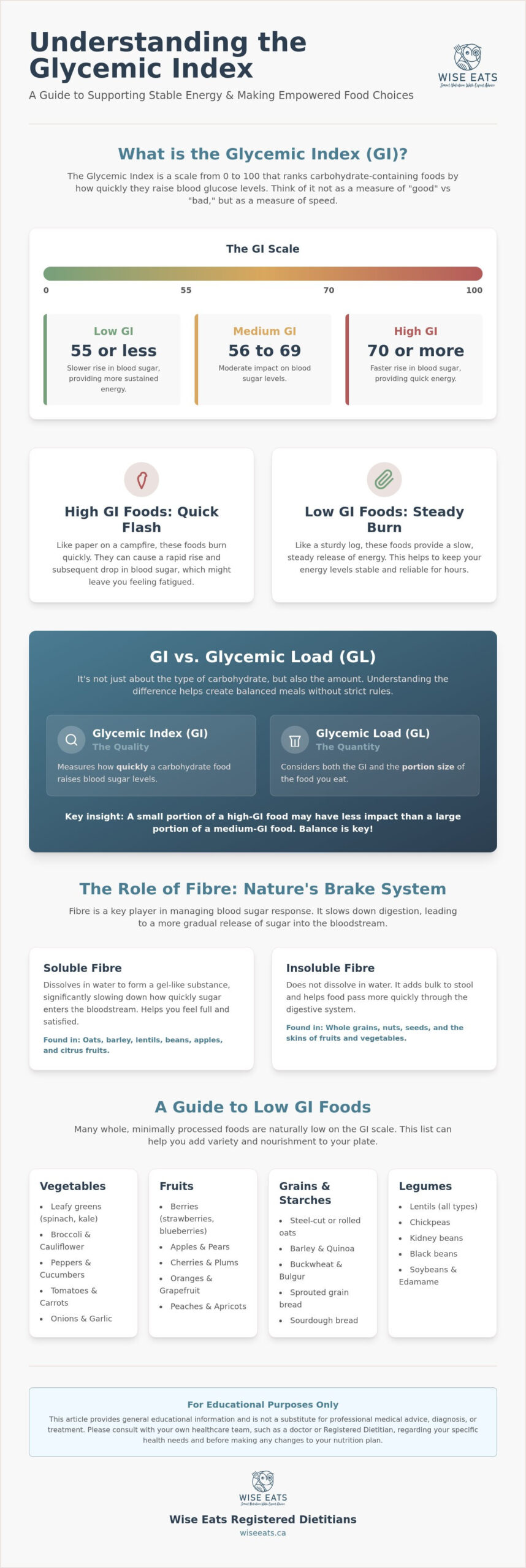
Have you ever noticed how some snacks leave you feeling energized while others lead to a mid-afternoon slump? The Glycemic index (GI) is a helpful tool that measures how quickly carbohydrate-containing foods raise your blood glucose levels. It doesn’t tell us if a food is “healthy” or “unhealthy” in a moral sense. Instead, it measures speed. Knowing where your favourite snacks fall on the scale can help you make choices that support your comfort and well-being. This is especially helpful when considering nutrition counselling for medical conditions like diabetes or pre-diabetes.
The scale runs from 0 to 100. We generally categorize foods into three clear brackets:
- Low GI: 55 or less
- Medium GI: 56 to 69
- High GI: 70 or more
To make this easier to visualize, imagine you are starting a campfire. High-GI foods, like white bread or certain sugary drinks, are like a flash of paper. They catch fire instantly and burn out just as fast. This can cause a quick rise and a subsequent drop in blood sugar. Low-GI foods are like a sturdy, slow-burning log. They provide a steady release of energy that lasts for hours. When you use a low glycemic index foods list, you are essentially choosing those slow-burning logs to keep your internal fire steady and reliable.
The Role of Fibre and Digestion
Fibre is one of nature’s best ways to manage blood sugar. Think of it as a natural brake for your digestive system. Soluble fibre, which you’ll find in foods like oats and lentils, dissolves in water to form a gel. This gel slows down how quickly sugar enters your bloodstream. Insoluble fibre, found in the skins of fruit and whole grains, helps keep things moving through your digestive tract. By including plenty of fibre, you can help ensure your energy remains stable. This helps you feel more present and less fatigued throughout your day.
Glycemic Index vs. Glycemic Load
You might hear the term “Glycemic Load” (GL) and wonder if you need a calculator for lunch. The good news is that you don’t. While GI measures the quality of the carbohydrate, GL considers the portion size. A food might have a high GI, but if you only eat a small amount of it, the overall impact on your blood sugar remains low. This is why we focus on “organizing” your plate rather than “restricting” what’s on it. Using a low glycemic index foods list is a great starting point, but the total balance of your meal is what truly supports your health goals.
The Comprehensive Low Glycemic Index Foods List
Finding a reliable low glycemic index foods list can feel like finding a map for a journey you’ve been taking alone. It’s helpful to remember that this list is for educational purposes. It isn’t a strict set of rules or a medical prescription. As you look through these categories, try to notice which of these foods you already enjoy. You might realize that many of your favourite meals are already supporting your blood sugar stability.
A Low-glycemic index diet focuses on how the body processes carbohydrates. By choosing items from the groups below, you can help create a more stable energy pattern throughout your day. This approach focuses on adding variety rather than taking things away.
Vegetables and Fruits
Most non-starchy vegetables are naturally low on the GI scale. These include leafy greens like spinach and kale, along with broccoli, cauliflower, peppers, and cucumbers. These foods add volume and nutrients to your plate with very little impact on blood glucose. They’re excellent for adding colour and crunch to any meal.
Regarding fruit, berries like strawberries and blueberries are excellent low-GI choices. Citrus fruits such as oranges and grapefruit, along with apples and pears, also fall into the lower category. While tropical fruits like mangoes or papayas have a higher GI value, they can still be part of a balanced eating pattern. You might find that enjoying them in smaller portions or pairing them with a source of protein helps maintain your energy.
Grains and Starches
Whole grains that are less processed generally have a lower GI because the body takes longer to break them down. Options like steel-cut oats, barley, quinoa, and buckwheat are great staples for a Canadian pantry. For bread, you might look for sprouted grain varieties or dense, heavy sourdough options. These often have a lower impact than highly refined white breads.
If you enjoy starchy vegetables, sweet potatoes and yams are often lower-GI alternatives to standard white potatoes. However, even white potatoes can be managed by how they are prepared, which can help you enjoy them more often.
Legumes and Plant-Based Proteins
Legumes are often considered the superstars of the low glycemic index foods list. Chickpeas, lentils, kidney beans, and navy beans are packed with both protein and fibre. This combination acts as a natural buffer, slowing down the absorption of carbohydrates. Soy-based options like tofu and tempeh are also wonderful additions that provide steady energy. If you find yourself feeling stuck or confused about how to incorporate these into your routine, you can always reach out to a dietitian for supportive, personalized guidance.
Why the GI Value of a Food Can Change
It’s a common misconception that the numbers on a low glycemic index foods list are set in stone. In reality, these values are more like a snapshot in time. The way you prepare, cook, and combine your ingredients can significantly shift how your body responds to them. This is a concept we call “food synergy,” where the total impact of a meal is different from its individual parts. By understanding these shifts, you can feel more empowered to enjoy your favourite cultural dishes without the anxiety of a sudden blood sugar spike.
One simple way to influence this process is through acidity. Adding a splash of lemon juice or a bit of vinegar to a meal can help lower its overall glycemic impact by slowing down the rate at which your stomach empties. It’s these small, practical adjustments that make a sustainable difference in your daily life.
Cooking Time and Ripeness
The texture of your food plays a surprising role in how quickly it digests. For example, pasta cooked “al dente” (firm to the bite) has a lower GI than pasta that has been overcooked. When starches are boiled for a long time, they become easier for your enzymes to break down into sugar. If you’re looking for a good guide to good carbs, you’ll find that even the ripeness of fruit matters. A green-tipped banana contains more resistant starch and will release sugar more slowly than a soft, spotted one. We encourage gentle experimentation with these textures to find what feels best for your body.
The Power of Pairing: Protein and Fat
We rarely eat a single food in isolation. Adding healthy fats, such as avocado or a handful of nuts, acts as a natural buffer that slows down the entire digestive process. Similarly, protein from sources like chicken, fish, or tofu helps blunt a blood sugar spike by triggering hormones that slow down stomach emptying. Think of it as building a safety net around your carbohydrates. For instance, pairing a higher-GI cracker with a low-GI hummus creates a balanced snack that provides lasting energy. This type of thoughtful dietitian meal planning allows you to focus on what you can add to your plate to support your health, rather than what you need to take away.
Practical Strategies for Low-GI Meal Planning
How do we take a low glycemic index foods list and turn it into a real-life Tuesday night dinner? The secret lies in organizing your plate rather than restricting what’s on it. For many Canadians, the “Plate Method” is a simple, visual way to build meals that support blood sugar stability without needing to count every gram of carbohydrate. Imagine your plate divided into sections: fill half with colourful, non-starchy vegetables, one quarter with a lean protein, and the final quarter with a low-GI grain or starch.
We are fortunate in Canada to have access to world-class, low-GI staples right in our backyard. Pulses, such as lentils and peas, are nutritional powerhouses that are grown extensively across our prairies. They are naturally high in fibre and protein, making them an ideal choice for keeping your energy steady. If you find the logistics of daily cooking a bit much, custom meal planning can help take the guesswork out of your week, ensuring you have nourishing options ready to go.
Smart Swaps for Everyday Favourites
You don’t need to overhaul your entire pantry to see a difference. Often, small adjustments to your favourite staples can lower the glycemic impact of your meal. Consider these simple transitions:
- Swap white rice for parboiled rice or pearl barley, which have a firmer texture and a lower GI.
- Swap instant oats for large-flake or steel-cut oats for a more satisfying, slow-burning breakfast.
- Swap sugary cereals for bran-based options topped with fresh berries to add a natural fibre boost.
Navigating the Grocery Store
Try to spend most of your time around the perimeter when you head to the grocery store. This is where you’ll find fresh produce and proteins that form the foundation of a balanced plate. The bulk section is another fantastic resource for finding affordable grains and legumes that might be on your low glycemic index foods list. When you check packaged foods, try to focus on the “fibre content” on the label rather than just looking at the sugar. Fibre helps slow down the digestion of those carbohydrates, which is exactly what we want for stability.
Every person’s body responds differently to various foods. While these general tips are a great starting point, working with a dietitian can provide the personalized insight needed to tailor these choices to your unique lifestyle and health goals. If you’re ready to create a plan that feels right for you, get in touch with us today to start your journey toward confident, compassionate eating.
When to Seek Help from a Registered Dietitian
While a low glycemic index foods list provides a helpful framework for choosing carbohydrates, it is not a substitute for personalized medical nutrition therapy. Every person’s biological response to food is unique. Factors such as your gut microbiome, stress levels, sleep patterns, and even your genetic makeup can influence how your body processes sugar. What works for a friend or a family member may not produce the same results for you, and that’s why an individualized approach is so valuable.
For those living with complex health conditions like Type 2 Diabetes, gestational diabetes, or PCOS, the nuances of blood sugar management become even more important. Developing a plan that accounts for your specific medical history ensures you are supporting your health safely. We always encourage you to speak with your primary healthcare team before making significant changes to your nutrition or lifestyle, especially if you are taking medications that affect blood glucose.
Signs You Might Need Individualized Support
Sometimes, general education isn’t enough to stop the cycle of fatigue or confusion. You might benefit from a more tailored strategy if:
- You still experience frequent energy crashes or intense hunger despite following a low glycemic index foods list.
- You feel overwhelmed, anxious, or restricted by the numbers and categories on the GI scale.
- You have a medical diagnosis that requires careful, professional monitoring of your nutrient intake.
- You find it difficult to adapt these concepts to your unique cultural dishes or a busy family schedule.
How We Can Support Your Journey
You don’t have to navigate these complexities by yourself. A professional at Wise Eats Registered Dietitians can help translate clinical evidence into a practical, compassionate plan that fits your real life. We provide nutrition counselling for medical conditions across Canada, utilizing a weight-neutral approach that prioritizes your well-being over rigid rules.
Our role is to act as a knowledgeable partner, helping you filter out misinformation and build confidence in your choices. Whether you’re looking for subtle adjustments or a comprehensive new strategy, we are here to offer steady, expert guidance. You deserve to feel at ease with your food and empowered in your health journey.
This article is for educational purposes and is not a substitute for professional medical advice, diagnosis, or treatment. Please consult with your own healthcare team, such as a doctor or Registered Dietitian, regarding your specific health needs.
Your Path to Balanced Energy and Food Freedom
Now that you understand how food synergy and preparation can work in your favour, you can approach your kitchen with a new sense of ease. A low glycemic index foods list is no longer a set of limits; it’s a map to help you navigate your daily energy needs. By combining this knowledge with the practical plate methods we’ve discussed, you can move away from the frustration of blood sugar spikes and toward a pattern of eating that feels both nourishing and sustainable. You have the tools to choose the “slow-burning logs” that keep your internal fire steady throughout the day.
At Wise Eats Registered Dietitians, we are dedicated to providing evidence-based nutrition care that respects your history and your lifestyle. Our Licensed Canadian Registered Dietitians offer a compassionate, weight-neutral approach, ensuring you receive guidance that is as supportive as it is professional. You don’t have to carry the burden of complex meal planning or the anxiety of blood sugar management alone. We are here to act as your knowledgeable partners in health.
Book a discovery call with a Registered Dietitian to create your personalized plan and take the first step toward a more peaceful relationship with food. We are here to help you find clarity and hope in every bite.
This article is for educational purposes and is not a substitute for professional medical advice, diagnosis, or treatment. Always consult your own healthcare team regarding your specific health needs and before making any changes to your nutrition or health behaviours.
Frequently Asked Questions
This article provides general educational information and is not a substitute for professional medical advice, diagnosis, or treatment. Please consult with your own healthcare team, such as a doctor or Registered Dietitian, regarding your specific health needs and before making any changes to your nutrition plan.
Is a low-GI diet the same as a low-carb diet?
No, a low-GI approach is quite different from a low-carb diet. While a low-carb diet focuses on the total quantity of carbohydrates you consume, a low glycemic index foods list focuses on the quality and speed of those carbs. You can still enjoy a wide variety of carbohydrates; you’re simply choosing those that release energy more slowly into your bloodstream to support your stability and peace of mind.
Can I eat potatoes on a low-glycemic index diet?
You can certainly enjoy potatoes as part of a balanced eating pattern. While white potatoes are generally higher on the scale, sweet potatoes and yams are often lower-GI choices. A helpful trick is to cook and then cool your potatoes before eating them. This process creates resistant starch, which may lower the glycemic impact even if you decide to reheat them later for your meal.
Does cooking food change its glycemic index?
Yes, cooking and preparation methods can significantly change how a food affects your blood sugar. Overcooking pasta or grains can make the starch easier for your body to digest, which can raise the GI value. In contrast, keeping grains firm or using methods like parboiling can help keep the GI lower. It’s all about how the heat and water break down the food’s internal structure.
Are all gluten-free foods low in glycemic index?
Not necessarily. Many gluten-free products use refined flours like white rice, corn, or potato starch, which are often high on the glycemic index. If you follow a gluten-free diet, it’s helpful to look for options made with whole grains like buckwheat, quinoa, or certified gluten-free oats. These choices help maintain more stable blood sugar levels while still respecting your specific dietary needs.
How do I know if a packaged food is low-GI?
Reading the nutrition label is the best way to understand a packaged food’s impact. Look for products that are high in fibre, as fibre acts as a natural brake for sugar absorption. Some products in Canada may also carry a specific low-GI symbol to make shopping easier. However, focusing on the ingredient list for whole grains and legumes is usually the most reliable strategy for your grocery trips.
Is the glycemic index the same for everyone?
The glycemic index is not the same for everyone because our bodies are beautifully unique. Factors like your gut health, activity levels, and even how well you slept can change how you respond to certain foods. This is why a low glycemic index foods list is a helpful guide rather than a strict rule; your personal experience and how you feel after eating are always the most important data points.
What is the best way to lower the GI of a high-carb meal?
The most effective way to lower the glycemic impact of a meal is to use “food synergy.” By adding a source of protein, healthy fat, or extra fibre to a high-carb dish, you slow down the entire digestion process. For example, adding a handful of nuts to a bowl of fruit or having a side salad before your pasta can help blunt a potential blood sugar spike and keep your energy steady.
Should I stop eating high-GI fruits like watermelon?
You don’t need to stop eating fruits like watermelon. While watermelon has a high GI value, it has a very low Glycemic Load (GL) because it is mostly water. This means a typical serving has a relatively small impact on your blood sugar. Enjoying these fruits in moderate portions, perhaps paired with a few pieces of cheese or some nuts, is a practical way to keep them in your life without worry.

Article by
Rachel McBryan, Dietitian
Rachel McBryan is a licenced Dietitian in British Columbia offering comprehensive nutrition counselling as virtual and/or in-person counselling sessions to suit your needs and preferences. With a Bachelor of Science in Nutrition and Food Science, Rachel has over 20 years experience helping people address their health through nutrition. She was awarded Human Nutrition and Food Science BSc.from University of Alberta followed by post-grad course work at UBC in guidance counselling.