

An eating disorder is a serious mental health illness.
If you are in immediate distress or crisis, please contact emergency services by dialling 911 or calling Vancouver Island Crisis Line: 1-888-494-3888. This article is educational information only, not professional diagnosis or treatment. Eating disorders require professional care. If you or someone you know is experiencing: *Severe food restriction or malnutrition *Uncontrollable binge eating or purging *Significant physical symptoms (dizziness, fainting, irregular heartbeat, severe pain) *Thoughts of self-harm or suicide related to eating or body image* Please seek immediate professional help. Contact your physician, local emergency services, or a mental health crisis line. A registered dietitian, psychologist, psychiatrist, and medical team work together to support eating disorder recovery.
What is a Diet for Autoimmune Conditions in Canada?
If you’re living with an autoimmune condition in Canada, you’ve likely been flooded with advice about what you should and shouldn’t eat. The online wellness world is full of rigid rules and long lists of “forbidden” foods, which can leave you feeling overwhelmed and anxious. But what if we approached it differently?
An autoimmune nutrition plan isn’t about restriction; it’s a compassionate, supportive framework designed to help you feel your best. It focuses on using food to help modulate the immune response and reduce chronic inflammation. This approach acknowledges that while food isn’t a cure, it is a powerful tool that can work alongside your medical treatment to manage symptoms.
In Canada, we see this approach help individuals living with a wide range of conditions, including:
- Rheumatoid Arthritis
- Lupus
- Celiac Disease
- Hashimoto’s Thyroiditis
- Psoriasis and Psoriatic Arthritis
- Inflammatory Bowel Disease (Crohn’s and Colitis)
A Canadian Registered Dietitian won’t hand you a one-size-fits-all diet. Instead, we start with the flexible foundation of the Canada Food Guide—emphasizing whole foods, colourful produce, and lean proteins—and then personalize it to your unique body, lifestyle, and symptoms, especially during a flare.
The Role of Inflammation in Autoimmunity
To understand how food can help, it’s useful to know a bit about inflammation. Acute inflammation is your body’s short-term, helpful response to an injury, like the swelling around a sprained ankle. Chronic inflammation, however, is a low-grade, persistent state of alert that contributes to the symptoms of many autoimmune conditions.
Think of your body’s inflammatory response as a volume dial. Factors like stress, sleep, medication, and genetics can turn it up or down. Food is another one of those dials. An anti-inflammatory pattern of eating, rich in antioxidants and healthy fats, can help turn the volume down, while certain other foods may turn it up for some individuals.
A huge part of this process happens in your gut. The gut microbiome—the community of trillions of bacteria living in your digestive tract—plays a key role in regulating your immune system. Nourishing your gut with fibre-rich foods helps support a balanced microbiome, which is a cornerstone of managing autoimmunity.
Why One-Size-Fits-All Diets Often Fail
Have you ever tried a diet that a friend swore by, only to find it didn’t work for you? That’s because of bio-individuality. Each person’s body is unique, and this is especially true in autoimmunity. The food that triggers a flare in one person with Hashimoto’s may be perfectly fine for another. Similarly, a nutritional strategy for Psoriasis might look very different from one for Rheumatoid Arthritis.
This is why rigid, named diets often lead to frustration. They don’t account for your specific genetics, gut health, stress levels, or even your food preferences. They can create a cycle of restriction and guilt, which only adds more stress to your plate.
Focusing on a single “perfect” diet overlooks the bigger picture of long-term, sustainable wellness. True nourishment comes from flexibility, not rigidity. For a deeper look into why this approach is more effective, you can explore our article on why diets fail long-term.
Comparing Popular Autoimmune Protocols: A Balanced View
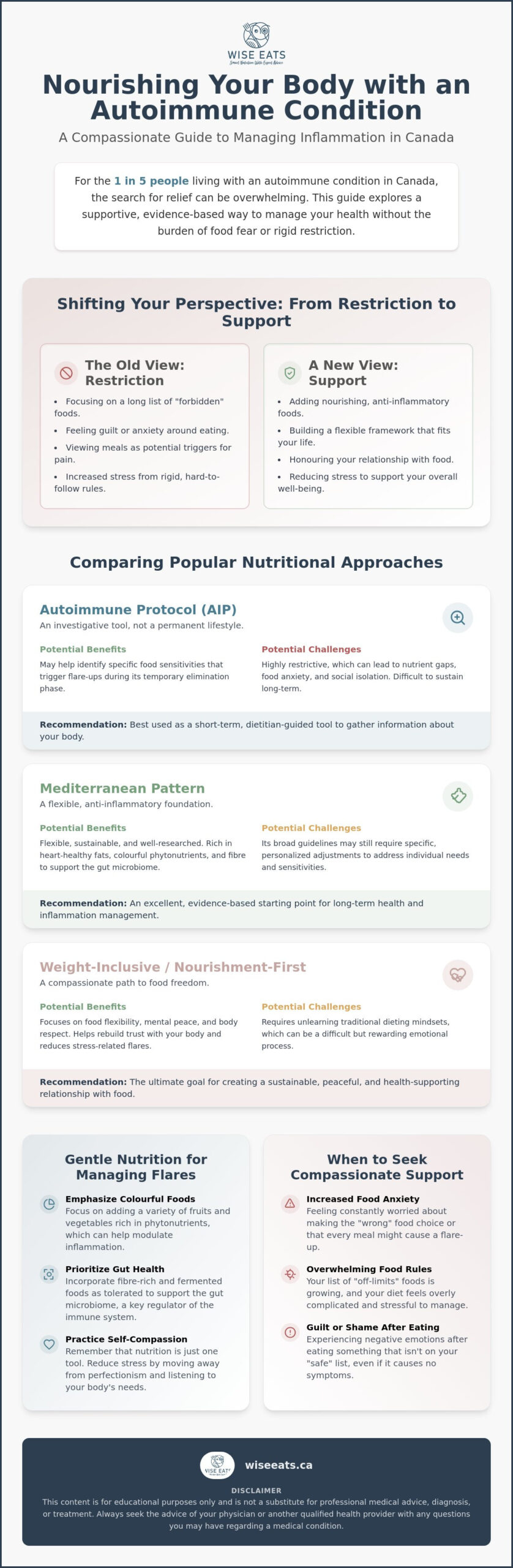
When you search for a diet for autoimmune conditions in Canada, you’ll quickly come across several popular protocols. It’s crucial to understand what they are, the evidence behind them, and their potential risks. Here, we’ll compare three common approaches: the Autoimmune Protocol (AIP), the Mediterranean pattern, and our weight-inclusive “Nourishment First” philosophy.
Understanding the Autoimmune Protocol (AIP)
The Autoimmune Protocol, or AIP, is a strict elimination diet that removes food groups like grains, legumes, dairy, nuts, seeds, nightshade vegetables, and eggs for a period of time. The goal is to reduce inflammation and identify potential trigger foods through a careful reintroduction phase.
While some people report symptom improvement, it’s critical to understand the context. The AIP is considered an investigational approach and is not a first-line, evidence-based treatment for autoimmune conditions. The research supporting it is still emerging and often consists of small studies without long-term data on safety or effectiveness.
Potential Cons and Risks of AIP:
- High Risk of Nutrient Deficiencies: Eliminating entire food groups can lead to deficiencies in key nutrients like fibre, calcium, and B vitamins.
- Can Foster Food Fear: Labelling so many foods as “bad” can create significant anxiety around eating and damage your relationship with food.
- Socially Isolating: Following such a restrictive plan can make it difficult to eat with family, attend social events, or enjoy meals out.
- Not a Long-Term Solution: AIP was never intended to be a lifelong diet. Its purpose is to be a temporary, systematic tool for gathering information.
Because of these risks, the AIP should never be attempted on your own. If it is used, it should only be for a short duration under the close supervision of a medical team, including a Registered Dietitian who can ensure nutritional adequacy and guide reintroductions safely.
The Mediterranean Pattern for Inflammation
In contrast to the AIP, the Mediterranean eating pattern is one of the most well-researched dietary approaches for managing inflammation. It isn’t a “diet” with strict rules but rather a flexible style of eating that emphasizes whole, nutrient-dense foods. Best of all, its core components are readily available in Canadian grocery stores.
Key Principles of the Mediterranean Pattern:
- Focus on Plant-Based Foods: A high intake of colourful fruits and vegetables, whole grains, legumes, and nuts provides a wealth of anti-inflammatory antioxidants and fibre.
- Embrace Healthy Fats: Olive oil is the primary fat source, along with fats from avocados, nuts, and seeds.
- Include Omega-3s: Fatty fish like salmon, mackerel, and sardines are encouraged a few times a week. Plant-based sources include flaxseeds, chia seeds, and walnuts—all easy to find in Canada.
- Moderate Intake: Dairy (like yogurt and cheese), poultry, and eggs are included in moderation. Red meat is consumed less frequently.
The Mediterranean pattern is celebrated for its flexibility, sustainability, and robust evidence base. It supports heart health, brain function, and, most importantly for our discussion, helps to lower markers of inflammation in the body without the risks associated with extreme elimination.
Our “Nourishment First” Weight-Inclusive Approach
At Wise Eats, we champion a “Nourishment First” philosophy. This weight-inclusive approach shifts the focus from what to remove to what to add. Instead of living in fear of potential triggers, we empower you to build a resilient body by flooding it with supportive nutrients.
This means focusing on:
- Adding Colour: How can you add one more colourful vegetable or fruit to your meal?
- Boosting Fibre: Can you swap a refined grain for a whole grain or add a spoonful of flaxseed to your morning oatmeal?
- Incorporating Healthy Fats: Where can you add a source of omega-3s or monounsaturated fats during your day?
This additive approach reduces the mental burden of dieting, promotes food freedom, and is far more sustainable. It’s about building a foundation of nourishment that allows your body to better handle inflammation from all sources, not just food.
Practical Nutritional Strategies for Managing Flares
When you’re in the middle of an autoimmune flare, your body is under immense stress. Your energy is low, you may be in pain, and your appetite can be unpredictable. During these times, nutrition isn’t about perfection; it’s about compassion and gentle support.
Here are some practical strategies to focus on:
- Prioritize Gentle Nutrition: When you feel unwell, choose foods that are easy to digest. Think soups, smoothies, stews, and well-cooked vegetables instead of raw salads or heavy, fried foods.
- Focus on Colourful Produce: Even when your appetite is low, try to incorporate colourful fruits and vegetables. These are packed with phytonutrients—plant compounds that act as antioxidants and help calm inflammation. A handful of berries in a smoothie or some steamed carrots can make a difference.
- Maintain Consistent Energy Intake: It takes a lot of energy for your immune system to do its job. Skipping meals can add more stress to your body. Aim for small, frequent meals or snacks throughout the day to keep your energy levels stable.
- Stay Hydrated: Water is essential. It helps lubricate joints, flush waste products, and keep all your bodily systems running smoothly. Herbal teas and broths also count towards your fluid intake.
Adding Supportive Nutrients
Certain vitamins and minerals play a particularly important role in immune function. While a food-first approach is always best, sometimes supplementation is needed to fill gaps, especially in a Canadian context.
- Vitamin D: Known as the “sunshine vitamin,” Vitamin D is a crucial immune modulator. Given our long Canadian winters and northern latitude, many Canadians have insufficient levels. Health Canada recommends supplementation, but the right dose is individual.
- Zinc and Selenium: These minerals are vital for immune cell function and are particularly important for thyroid health, which is relevant for conditions like Hashimoto’s. They are found in foods like seafood, nuts, and seeds.
- Omega-3 Fatty Acids: These healthy fats, found in fatty fish, flax, and chia seeds, are powerful anti-inflammatory agents.
It’s important not to self-prescribe supplements, as too much of a good thing can be harmful. A Registered Dietitian can review your blood work and diet to provide personalized vitamin and mineral recommendations that are safe and effective for you.
Managing Digestive Discomfort During Flares
It’s very common for autoimmune conditions to overlap with digestive issues like Irritable Bowel Syndrome (IBS). During a flare, symptoms like bloating, gas, or irregular bowel movements can become more pronounced.
To manage this, you might find it helpful to:
- Choose Cooked Vegetables: Raw vegetables are high in insoluble fibre, which can be irritating to a sensitive gut. Roasting, steaming, or sautéing vegetables makes them much easier to digest.
- Opt for Low-Impact Fibre: Focus on soluble fibre sources like oats, psyllium, and the flesh of fruits and vegetables (like applesauce or mashed sweet potatoes).
- Listen to Your Body: Pay gentle attention to how different foods make you feel without judgment. A food journal can be a tool for curiosity, not a rulebook.
If digestive issues are a primary concern, working with a professional on nutrition for digestion problems can provide targeted relief and a clear path forward.
When to Seek Help: Identifying Red Flags
Trying to manage your diet on your own can be tough, and sometimes, it can do more harm than good. It’s important to recognize when you might need professional support from a healthcare team. These aren’t signs of failure; they are simply signals that it’s time to call in reinforcements.
Consider seeking help if you notice:
- Growing Food Anxiety: You feel anxious or guilty after eating foods you believe are “off-plan,” or you spend a significant amount of time worrying about what to eat.
- Social Withdrawal: You start avoiding social gatherings, restaurants, or family dinners because you’re afraid of the food options and don’t know how to navigate them.
- Worsening Symptoms or New Concerns: Despite your best efforts with “internet advice,” your symptoms are persisting, getting worse, or you’re experiencing unintentional weight changes or a significant loss of energy.
- An Increasingly Restrictive Diet: Your list of “safe” foods keeps getting smaller and smaller, and you fear reintroducing foods you’ve cut out.
The Importance of a Compassionate Support Team
Navigating an autoimmune condition requires a support team that puts your overall well-being first. A weight-inclusive approach is crucial because it focuses on health-promoting behaviours rather than the number on the scale. This perspective is safer, more sustainable, and protects your mental health.
Look for practitioners who align with Health At Every Size® (HAES) principles. These professionals respect body diversity and will help you find ways to care for your body without promoting restrictive dieting. They understand that health is multifaceted and will work with you to find a peaceful, balanced relationship with food. To learn more about this compassionate model of care, read our guide on what a HAES dietitian is.
How a Canadian Registered Dietitian Personalizes Your Plan
Working with a Registered Dietitian (RD) in Canada means moving beyond generic templates and into truly personalized, evidence-based care. We are regulated health professionals trained to provide medical nutrition therapy, and our goal is to help you build a sustainable eating pattern that reduces your symptoms while enhancing your quality of life.
Here’s how we can help:
- Go Beyond Generic Advice: An RD will conduct a comprehensive assessment of your medical history, lifestyle, symptoms, and relationship with food to create a custom meal plan that is realistic for you.
- Use Evidence-Based Recommendations: We practice evidence-based medicine. We sift through the online noise and clinical studies to provide recommendations grounded in science, not trends. This includes lab-result-driven advice on supplements to ensure they are both safe and effective.
- Coach for Food Flexibility: A huge part of our work is helping you reduce the stress of autoimmune management. We provide strategies for dining out, navigating social events, and listening to your body’s cues, so you can live your life without being controlled by food rules.
- Navigate the Canadian Healthcare System: We can help you understand how to use your extended health benefits for dietitian services, as many insurance plans in Canada offer coverage for our support.
If you’re tired of the confusion and want a clear, compassionate, and science-backed path forward, we invite you to book a discovery call with one of our Registered Dietitians today. Let’s work together to find a nourishing pattern that works for your body.
Evidence-Based Medical Nutrition Therapy
As dietitians, our work is rooted in Medical Nutrition Therapy (MNT). This is a clinical approach to managing medical conditions through individualized nutrition plans. When you engage in nutrition counselling for medical conditions at Wise Eats, we integrate all aspects of your health.
Many people with autoimmune conditions also manage other health concerns, like PCOS, GERD, or high blood pressure. An RD is uniquely qualified to help you navigate these complex interactions, ensuring your nutrition plan supports your whole body. We are here to listen to your story, understand your challenges, and collaborate with you and your healthcare team to build a plan that brings you relief and peace of mind.
This content is for educational purposes only and is not a substitute for professional medical advice, diagnosis, or treatment. Always seek the advice of your physician or other qualified health provider with any questions you may have regarding a medical condition.

Article by
Rachel McBryan, Dietitian
Rachel McBryan is a licensed Dietitian in British Columbia offering comprehensive nutrition counselling for eating disorder recovery, including personalized meal planning that emphasizes flexibility and food autonomy. She conducts health-focused, non-punitive nutritional assessments including diet and body composition analysis, blinded if needed. Her services also include medical nutrition therapy for digestive health and metabolic function including weight gain or loss, and supplementation guidance as virtual and/or in-person counselling sessions to suit your needs and preferences. She works with clients aged 12 to 100 who are experiencing restrictive eating, binge eating, food anxiety, body image concerns, and disordered eating patterns and provides services to gender and neurologically diverse folks. Rachel's approach is real-food and weight-inclusive, grounded in evidence-based and trauma-informed practice and principles. Healing from an eating disorder means reconnects you or your child with adequate nourishment, food flexibility, self-compassion, and increased quality of life. Rachel collaborates with physicians, mental health professionals, and other members of your healthcare team to provide coordinated, compassionate care that supports your healing journey.